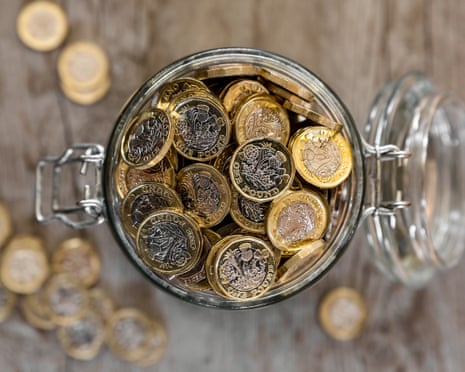
Don’t delay in taking advantage of the competition that is pushing up interest rates and increasing choice, experts say
It is shaping up to be a decent summer for savers as fierce competition among providers pushes up interest rates and increases choice.
You can currently get instant- and easy-access accounts that pay up to 5% interest, and fixed-rate savings bonds that pay almost that much. Meanwhile, those looking for a regular savings account can now get up to 8%.
So if you have cash languishing in a savings, or current, account that is earning no interest, or only giving you a paltry return, now is the time to move it to a better-paying home.
“Things are looking promising – the choice is really good, but it’s all about being proactive and switching, and making the most of these products while they are there,” says Rachel Springall at the financial data provider Moneyfacts.
This month, the number of “live” savings accounts paying more than the Bank of England base rate – currently 3.75% – rose to 1,385, the highest figure for more than six years, says Moneyfacts. That figure represents more than half of the total number. (Though it is based on the interest rate paid on a balance of £5,000.)
With the cost of living still a big issue, many savers will be keen to keep their cash close at hand where they can get at it if needed. The average non-Isa easy-access account rate is now the highest it has been for almost a year, at 2.53%.
The top-paying easy-access accounts offer quite a bit more.
Revolut, the fast-growing fintech that is now a fully fledged bank, recently launched a “market-leading” savings rate offer for new UK customers. If you open one of its instant-access savings accounts between now and 4 August, you can benefit from a rate of 5% until 4 December this year. This will apply on balances up to £25,000. After 4 December, the interest will revert to the rate determined by your plan. So if you are on Revolut’s free standard plan, or its £3.99-a-month Plus plan, for example, it will fall to 2.9%.
Chase, the British retail arm of the US bank JP Morgan, has an easy-access account called Chase Saver that pays new customers 4.5%. That rate is boosted by a 2.25% interest bonus that lasts for 12 months – the account’s standard rate is 2.25%. It lets people stash away up to £3m – however, a (free) Chase current account is required.
Fixed-rate savings bonds offer some of the highest rates. You typically have to tie up your money for between six months and five years, and they provide a clear, guaranteed return.
One-year fixed-rate bonds have been “very popular”, says Springall, as many people do not want to tie up their cash for too long. The good news is that this month, the average one-year fixed bond rate rose to 4.22% – its highest since November 2024.
However, at the time of writing you could get more than that: for example, Marcus by Goldman Sachs had a one-year fixed-rate bond paying 4.9%. Up to £250,000 can be paid into this online account. And Atom Bank has a one-year fixed-rate bond paying 4.8%.
Regular savings accounts often offer eye-catching interest rates. With these, you put aside some money each month for a limited period. Often, you have to have a current account with the bank offering the product, and in many cases the headline rate only lasts for a year.
Lloyds launched a new instant-access regular savings account earlier this month called Monthly Saver. The account pays an impressive 8%. There is also a version available for customers of Halifax and Bank of Scotland, although the Halifax one (called Regular Saver) does not let you access your savings during the 12-month term. In all cases you can save from £25 to £250 a month by standing order or bank transfer, and your interest is paid 12 months after you open the account.
Santander also has a regular savings account paying 8% for 12 months. It lets you save up to £200 a month from its current accounts.
But watch out for the savings interest “tax trap” if you are putting a large-ish sum of money into a decent-paying non-Isa account.
Interest earned outside an Isa is subject to tax once you go over your personal savings allowance. This is £1,000 for basic-rate taxpayers and £500 for higher-rate taxpayers, and up to £5,000 if you earn less than £17,570 a year.
Source: The Guardian World — This article was automatically imported from the source. Read full article at original source →