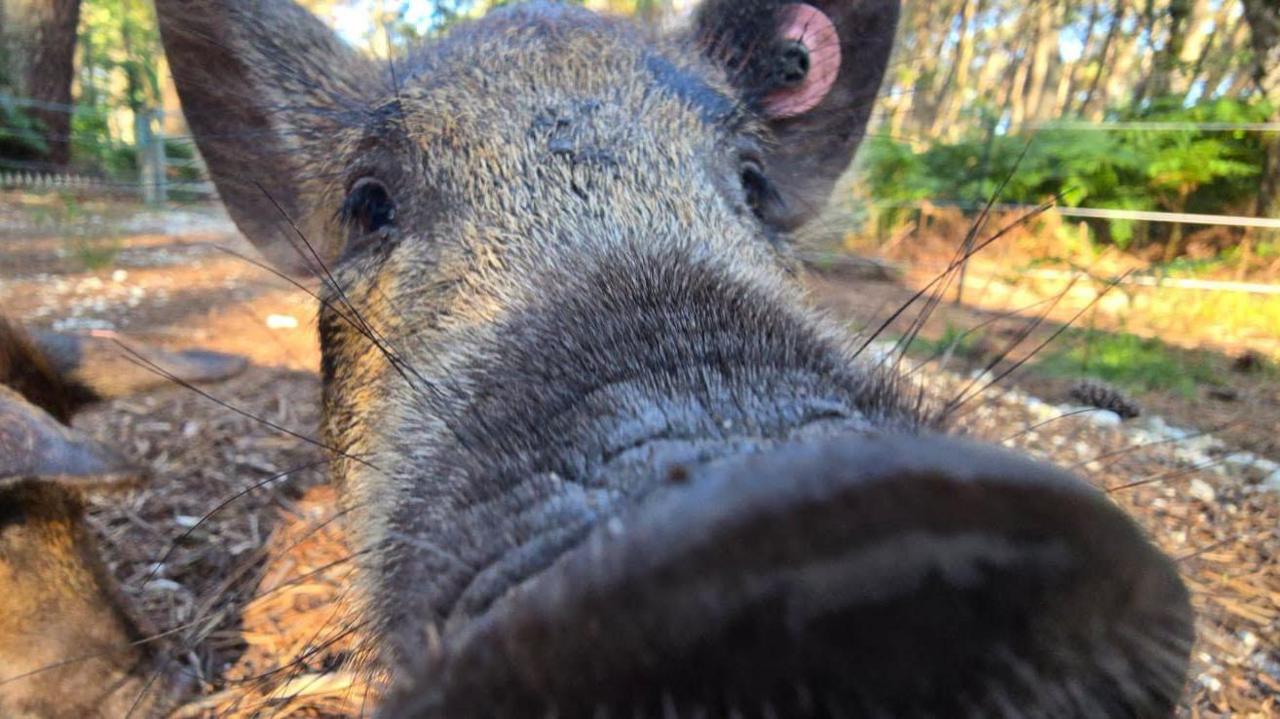
 Image source, Dorset Wildlife Trust
The pigs will be hairy when they are fully grown
-
Published17 July 2026
Two “cheeky” pigs have been introduced to an island nature reserve to help restore its heathland habitat.
The Mangalitsa-cross pigs will help manage bracken on Brownsea Island, Dorset, to allow a greater diversity of plants and wildlife.
Dorset Wildlife Trust (DWT) has been loaned the animals by the Salt Pig farm at Putlake.
It said the pair, which will eventually grow to about 180kg (28 stone), were settling in to their enclosure at the north-west end of the island.
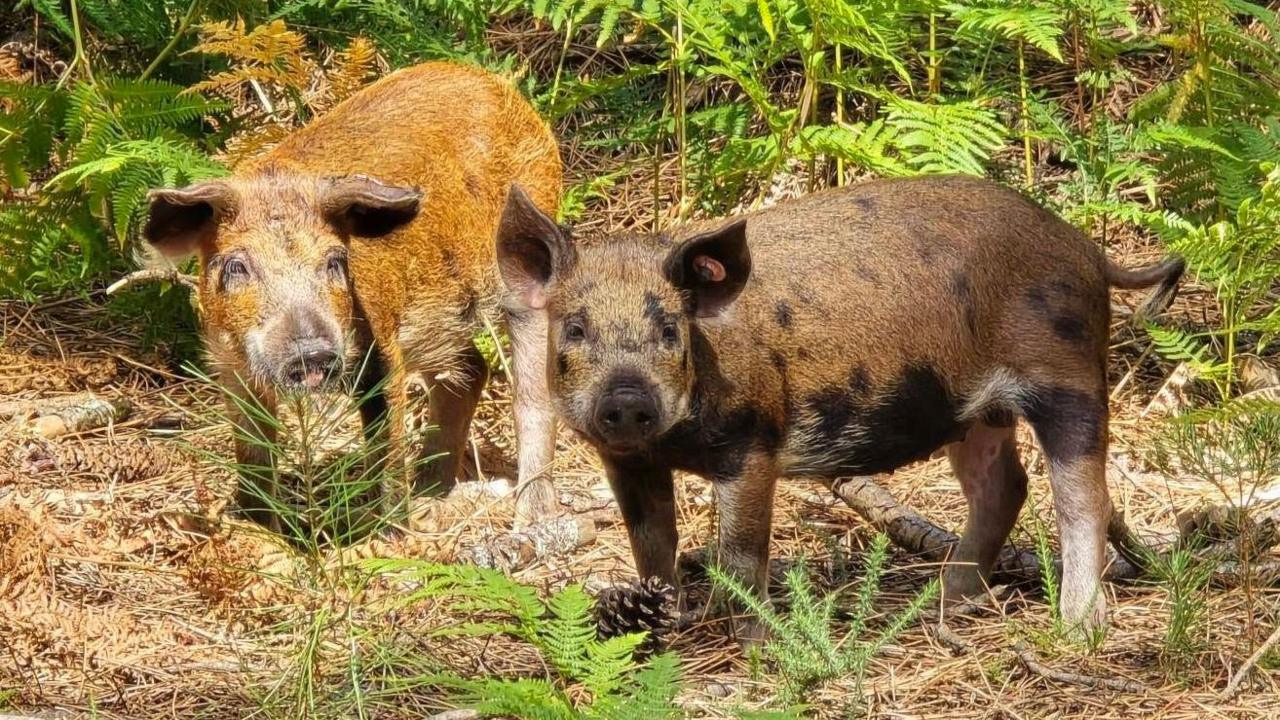 Image source, Nicki Tutton
The pigs will eventually grow to about 180kg (28 stone)
Mangalitsa-cross pigs are related to the hairy Hungarian breed, developed in the 1830s, that mixed eastern European domestic breeds with the wild boar.
A DWT spokesperson said: “As they forage, pigs naturally turn over the soil while searching for roots and rhizomes, helping to reduce bracken cover and create space for a greater diversity of plants and wildlife.
“While bracken is a native plant with an important role to play, it can become dominant in some areas, affecting the balance of the woodland understory.”
The pigs are about four months old but will grow into large, woolly adults.
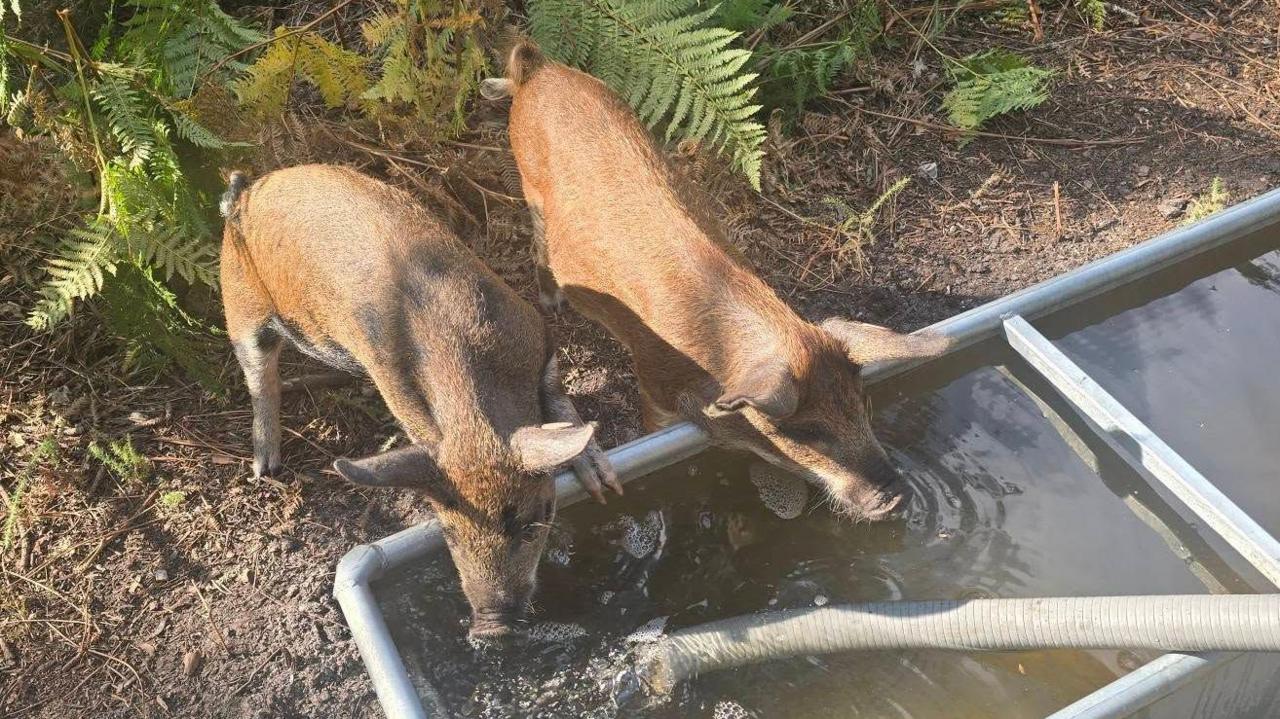 Image source, Nicki Tutton
The pigs have been loaned by the Salt Pig farm at Putlake
The spokesperson added: “The pair are settling in well… and their curious, and slightly cheeky, personalities are already starting to show.
“We can’t wait to see the positive impact they’ll have on Brownsea’s landscape.”
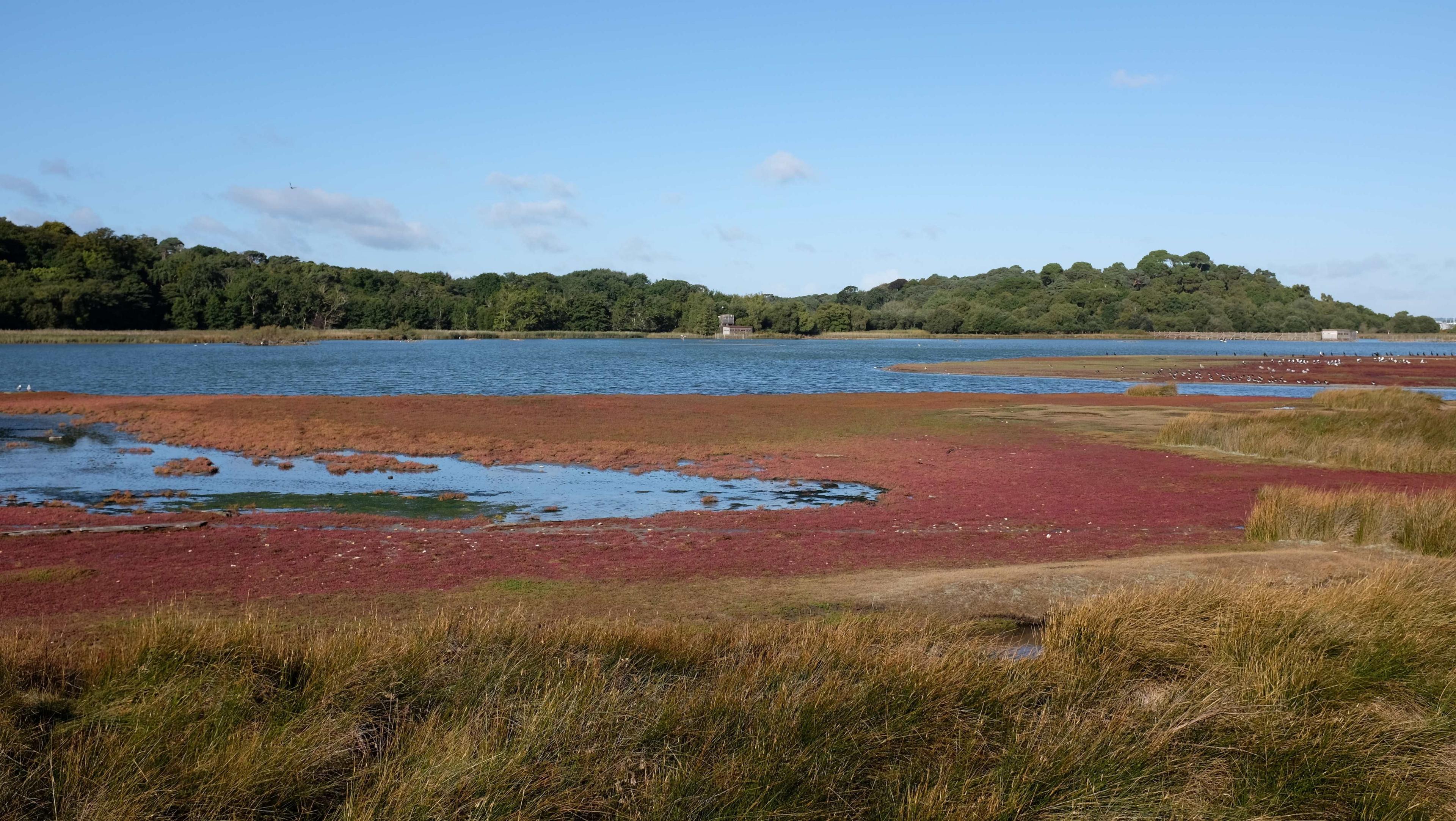
The wildlife trust manages 100 hectares of land on the northern side of Brownsea Island in partnership with the National Trust.
The island forms part of the Purbeck National Nature Reserve and is an internationally important area for wildlife.
Get in touch
Your Voice
Related topics
-
-
Published29 December 2025
-
-
-
Published11 April 2024
-
Related Links
Source: BBC Science — This article was automatically imported from the source. Read full article at original source →