Thinner watches, wider foldables, higher prices.
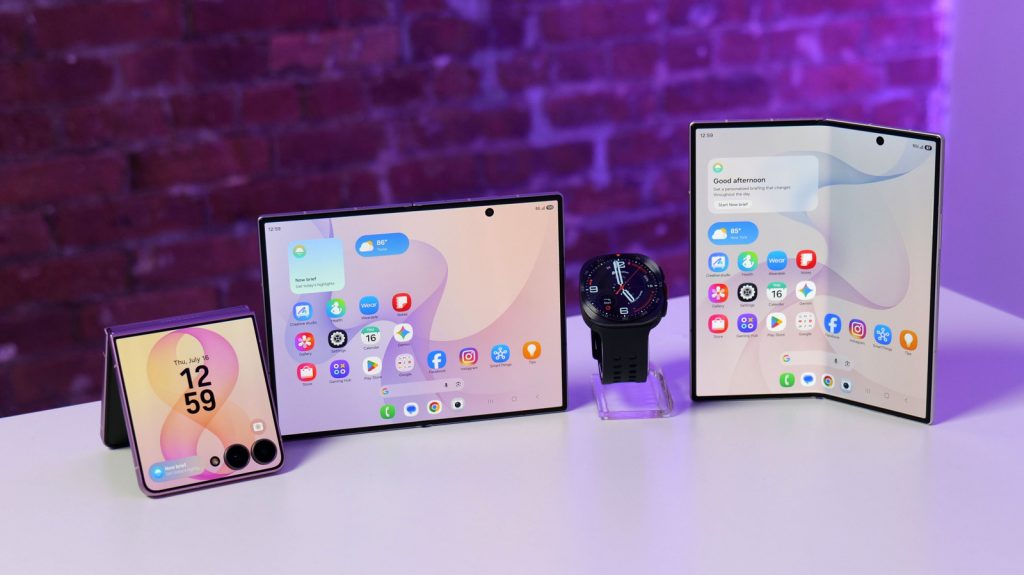
Samsung has gotten a jump on the traditional fall hardware season over the last few years by announcing its Galaxy foldable and smartwatch lineups each July. The company is sticking to that approach this year with a mid-summer reveal of three new phones: the Galaxy Z Fold 8 Ultra, Galaxy Z Fold 8 and Galaxy Z Flip 8. Samsung also unveiled the Galaxy Watch 9 and Galaxy Watch Ultra 2 smartwatches.
The phones have a few things in common. For instance, all three run on the same chipset, the Snapdragon 8 Elite Gen 5 for Galaxy. The base models come with the same memory and storage options — 12GB of RAM with 256GB or 512GB of storage. The two Fold 8 variants each have a configuration with 16GB of RAM and 1TB of internal storage.
The selfie cams are all 10MP wide-angle lenses. The one on the Flip 8 and those on the covers of the two Fold 8 models are all capable of shooting 4K video at 60fps. The main selfie cams on the Fold 8 phones can handle FHD footage at 60 fps.
For the new phones, Samsung is using new Flex Titanium tech. According to the company, this is a titanium-based design that helps keep them thin and durable. While the last generation did have a rigid titanium plate behind the entire display, the new foldables add a titanium alloy layer beneath the phone's flexible OLED. Samsung says "Flex Titanium helps strengthen display support, absorb pressure and impact and reduce crease visibility," while making it feel smoother and more natural to open up the devices.
For all its progress on the design front, Samsung's latest handsets still don't natively support Qi2 charging. It's been 18 months since the company first started supporting the standard with the "Qi2-ready" Galaxy S25. Yet you'll need to put one of these new phones in a compatible case with magnets before you can get get the most out of a Qi2 charger.
As for the wearables, the Galaxy Watch 9 and Watch Ultra 2 both run on a Snapdragon Wear Elite chipset. Qualcomm unveiled the 3nm processor earlier this year. It's the first Snapdragon chip for wearables to have a dedicated Hexagon NPU, which is capable of supporting AI models with two billion parameters.
Pre-orders for all of the devices start today. They'll hit shelves on August 7.
Let's dig into the details of each phone and watch, as well as some of the new features. Here's everything Samsung announced at its July 2026 edition of Galaxy Unpacked.
Let's start with the highest-end model, the Galaxy Z Fold 8 Ultra, largely because seeing the price of that device first might make the others seem less painful. The Fold 8 Ultra starts at $2,100. That's $100 more than the Fold 7 started at last year — Samsung has two Fold variants for us this time around.
On the exterior of the Fold 8 Ultra, there's a 6.5-inch, FHD+ Dynamic AMOLED 2x display. Open it up and you'll have access to an 8-inch QXGA+ Dynamic AMOLED 2x screen. Both displays have a 120Hz adaptive refresh rate.
The camera array boasts a 200MP main sensor, along with 50MP ultrawide and 10MP telephoto lenses with support for 3x optical zoom and 30x Space Zoom. The array is capable of shooting 8K video at 30fps. The battery has a 5,000mAh capacity and support for 45W fast charging. The handset weighs 7.6 ounces (215 grams) and is just 4.1mm thin when it's open. Samsung also says it has "an expanded graphite cooling structure" to help dissipate heat, especially during demanding tasks.
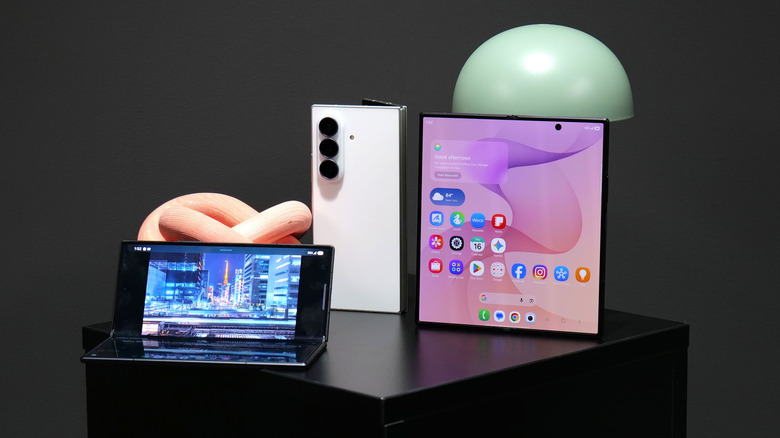
Next up, we have the Galaxy Z Fold 8, which starts at $1,900. The screens are smaller than those on the Fold 8 Ultra. The main display is a 7.6-inch QXGQ+ Dynamic AMOLED screen. On the exterior, you'll find a 5.5-inch FHD+ Dynamic AMOLED 2x screen that has a 10:16 aspect ratio and up to 3,000 nits of brightness. It weighs in at seven ounces (201 grams), which is 0.6 ounces or 14 grams lighter than the highest-end model.
But here's where things get interesting. The Fold 8 marks a step away from the vertical orientation that Samsung has focused on in recent years. It has a horizontal fold, so it's more wide than tall. The interior screen has a 4:3 aspect ratio and, when it's folded, the device is about 9mm (0.4 inches) wider than the Fold 8 Ultra, so that might take some getting used to.
With a capacity of 4,800mAh, it has a larger battery than the Z Fold 7's 4,400mAh. The Fold 8 (like the Fold 8 Ultra) supports Super Fast Charging 2.0 over a wired connection as well as Super Fast Wireless Charging.
The Fold 8 doesn't have a telephoto lens, though. The main camera is a 50MP sensor and there's a 50MP ultrawide in the array, which supports 10x digital zoom and 8K video at 30fps.
Along with the latest Folds, Samsung has a new phone with a clamshell design too. The Galaxy Z Flip 8 has a 4.1-inch HD+ Super AMOLED display on the exterior, with an adaptive refresh rate of 60/120fps. When you flip open the phone, you'll see a 6.9-inch FHD+ Dynamic AMOLED 2x screen with a 120Hz adaptive refresh rate.
The camera array houses a 50MP main lens and a 12MP ultrawide, with support for a 10x digital zoom and 4K, 60fps video. The battery a smaller capacity of 4,300mAh, the same as in last year's model.
The Z Flip 8 will be lighter in your pocket than the other two foldables in the latest lineup, as it weighs 6.3 ounces (180 grams). It'll metaphorically keep your wallet a bit heavier than if you were to opt for one of the Fold 8 phones, as it starts at $1,200. That's $100 more than the Z Flip 7 and 6, which were in turn $100 more than the $1,000 Z Flip 5. Just like with the battery sizes and aspect ratios, the numbers keep going up.
Google announced a bunch of AI features for Samsung's new foldables. These devices include a Gemini Intelligence-powered task automation tool that debuted in beta earlier this year. It supports more than 40 apps, and can handle tasks like snapping up event tickets and ordering food. The AI can use images as prompts and it can comprehend what you see on your screen.
Gemini Notebook (previously known as NotebookLM) is pre-installed on the foldables, which come with a free six-month trial of Google AI Pro. In Android 17, there's also a feature designed to make it easier for folks to switch over from iPhone. It includes a wireless data transfer option.
Elsewhere, the foldables have a neat new Fan Cam feature in the video editor. This lets you recrop any video to focus on one person. Your device will automatically keep that person in the frame as they move around.
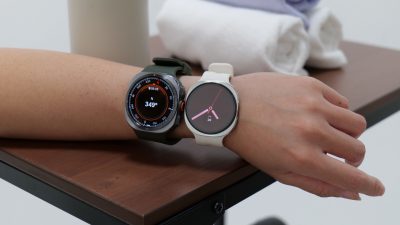
The Galaxy Watch 9 should run for longer than its predecessor on a single charge. It has a battery with a capacity of 390mAh — that's 20 percent more than the Galaxy Watch 8. The display still has a maximum brightness of 3,000 nits, but the larger battery should keep the lights on for longer before it's time to recharge.
The Watch Ultra 2 also gets some notable spec bumps, with a display that can reach a brightness of 5,000 nits (up from 3,000 in the previous model) and an 800mAh battery, which is 35 percent larger. Despite those upgrades, the titanium, shock-resistant casing is 12 percent thinner than the Galaxy Watch Ultra at 10.7mm (0.4 inches).
Samsung has shrunk the bands for both watch models, making them lighter and softer. Hopefully, that'll make the new models more comfortable to wear.
The Watch 9, which has an aluminum casing, has a 40mm variant that's available in graphite and cream and a 44mm version with graphite/silver options. It starts at $380 for Bluetooth models and $430 for versions that include LTE. As for the 47mm Watch Ultra 2, that costs $700 and is available in titanium gray and titanium silver. Those are all a shade higher than the previous models, which launched at $350 for the Bluetooth Watch 8, $400 for the LTE Watch 8 and and $650 for the Watch Ultra.
Both watch models can track various metrics that tie into the AI-powered Health Assistant Samsung revealed on Tuesday. The Vitals function, for instance, monitors factors such as heart rate and blood oxygen level while you sleep. You'll be alerted to significant variances from your baseline stats (Apple Watch has had a similar feature since 2024).
Other health-minded tools include a Fitness Index — which offers guidance and support based on your fitness as you work toward your goals — a Sleep Apnea feature, noise alerts and a Heart Health Score. With these updates, Samsung hopes that you'll have a fuller picture of what your health data actually means by offering actionable insights. Tying in with the health focus of the latest watches, buyers will get a free trials of Strava and iFit for 60 days and two months, respectively.
The Watch Ultra 2 has a trail-running feature. This offers runners elevation information and pace guidance. A nutrition alert function estimates your sweat loss relative to body weight and offers suggestions on hydration. Samsung is also pitching this as a watch for divers, with features like an IP69K rating and a Diving app it plans to release later this year.
As for Gemini integration, you'll be able to activate the assistant on the watches simply by raising your wrist.
Source: Engadget — This article was automatically imported from the source. Read full article at original source →